
Transit Property Buyer Guide
What Does “Walking Distance to a Train Station” Really Mean for Property Buyers?
Distance is only the starting point; route quality determines whether residents will actually walk every day.

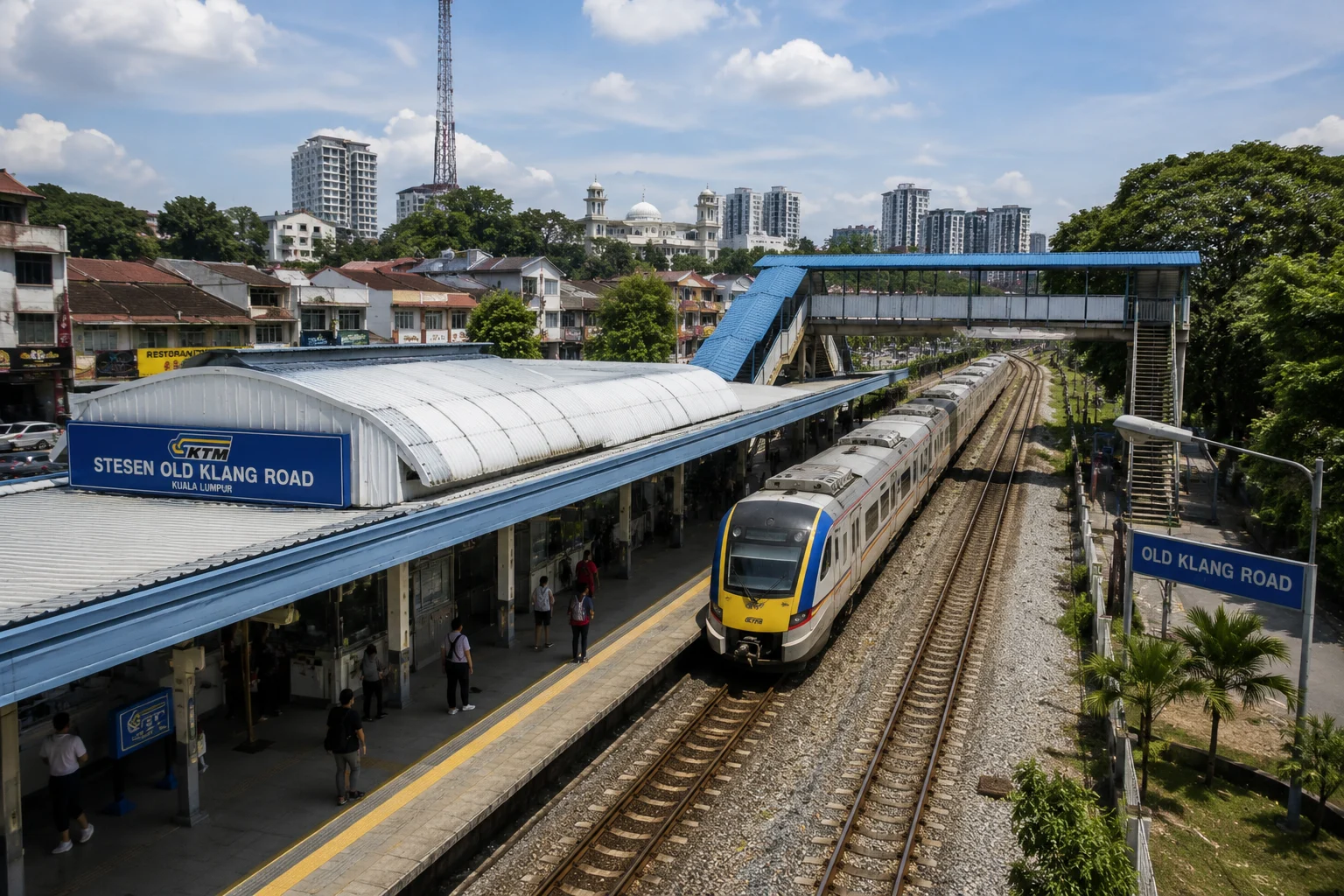
In Malaysian property marketing, “walking distance” may refer to a straight-line radius, a mapped road route or simply visual proximity. Buyers should test the real entrance-to-platform journey, including crossings, gradients, weather protection, lighting, security and train frequency, before assigning value to a rail-adjacent address.
Key Insight
“Walking distance” should be treated as a route-quality claim, not a radius claim. The best evidence is a timed, repeatable entrance-to-platform test under realistic conditions.
Article Introduction
“Walking distance to a train station” sounds objective, but it can describe very different daily experiences. A project 400 metres from a station in a straight line may require a much longer route because of highways, fences, drains or inaccessible entrances. Another home slightly farther away may have a direct, shaded and well-lit path that feels easier.
PLANMalaysia materials use walking catchments around transit as planning references, including approximately 400 metres in transit-oriented contexts and wider first-and-last-mile zones. These are useful planning measures, not promises that every property inside a circle offers a comfortable walk. The buyer’s real question is whether the complete journey remains safe, practical and repeatable during normal commuting hours and Malaysian weather.

Quick Answer
Walking distance should be measured from the actual residential exit to the station entrance passengers can use—not from plot boundary to plot boundary. Buyers should record the route length and time, then assess crossings, pavement continuity, gradients, lighting, shelter, personal security, accessibility and the wait after reaching the platform. A short but hostile route may deliver less daily value than a longer, better-connected one.
Straight-Line Distance Is Not the Walking Route
Map pins often calculate distance between central points. Residents do not travel through locked fences, railway reserves or private land. They leave through a particular lobby or guardhouse, follow permitted public paths and enter through a specific station gate.
A railway line can create separation as easily as connection. A station may be visible from a balcony but located on the opposite side of the tracks, with the nearest bridge adding a substantial detour. Large roads, slip lanes, construction sites and gated compounds can have the same effect. Buyers should map the legal route and physically walk it.
What Do 400 Metres and 800 Metres Actually Mean?
Planning guidance commonly uses distance bands to organise transit-supportive development and first-and-last-mile improvements. A 400-metre radius is often treated as a close walking catchment, while an 800-metre zone can cover a broader walk or feeder connection. Human behaviour is less tidy.
Four hundred metres on a continuous level pavement may take roughly five to seven minutes for an able-bodied adult. The same map distance can take longer for a parent with a stroller, an older resident, a wheelchair user or someone navigating traffic signals and stairs. Eight hundred metres may be acceptable for a healthy commuter in good weather but unattractive during heavy rain, extreme heat or late-night travel. Treat the bands as screening tools, then test the actual user journey.
Route Quality Matters More Than the Marketing Number
A usable walking route needs continuity. Look for proper footpaths, adequate width, safe kerbs, drainage covers and a surface that does not force pedestrians onto the road. Check whether parked vehicles, motorcycles, utility poles or informal stalls regularly block the path.
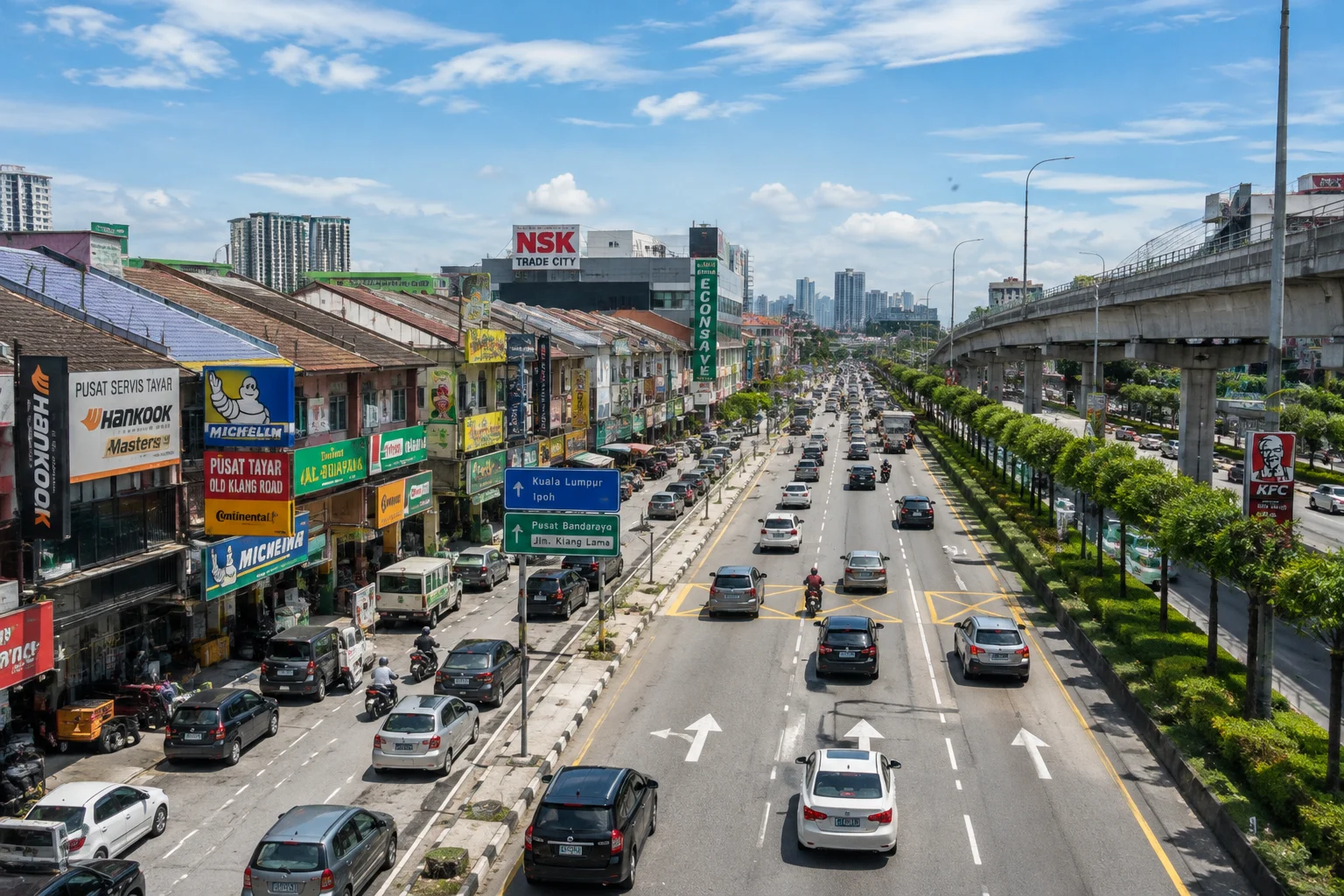
Road crossings are often the decisive point. A pedestrian bridge may improve separation from traffic but add stairs and distance. A signalised crossing is only helpful when motorists respect it and waiting times are reasonable. Uncontrolled multi-lane crossings can make a technically short route unsuitable for routine use.
Gradient also matters. Steep ramps, repeated level changes and poorly designed stairs increase effort and may exclude some users. Buyers with mobility needs should verify lifts, ramps and step-free access throughout the route and station—not only at the development entrance.
Weather Protection in Malaysia
Heat and heavy rain can change walking behaviour. A covered link does not need to connect every metre to add value, but buyers should understand exactly where shelter begins and ends. Review shade, tree cover, awnings, covered crossings and whether water accumulates along the path.
Marketing images may show a proposed covered walkway. Confirm whether it is completed, approved, funded, maintained and open to the public. If a connection crosses third-party land, ask what secures continued access. A route that depends on a future component should be described as proposed until it is delivered.
Safety, Lighting and Time of Day
A morning site visit cannot reveal the night-time experience. Walk the route during the hours the household expects to use it. Check lighting, active shopfronts, blind corners, isolated stretches, traffic speed, guard visibility and the number of other pedestrians.
Personal comfort varies, so there is no universal safety score. A buyer returning alone after dark may judge a route differently from a household travelling together at peak hour. The relevant test is whether each intended user would realistically choose the route rather than defaulting to driving or e-hailing.
Reaching the Station Is Only Half the Journey
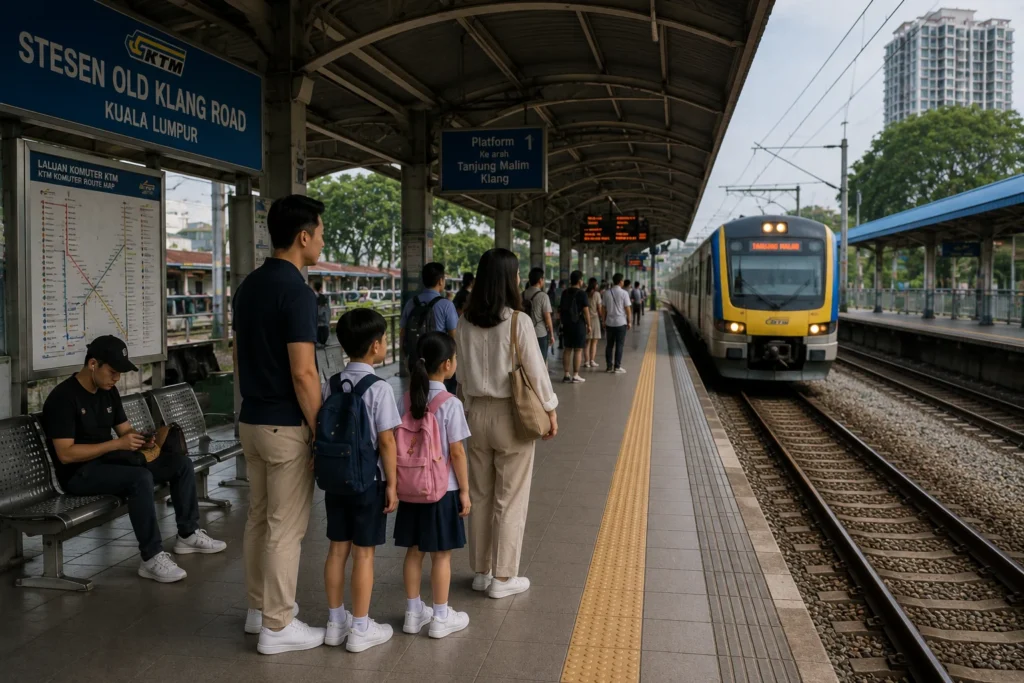
Rail convenience depends on the service as well as the walk. Confirm which line and station entrance the route reaches, current operating hours, typical peak and off-peak frequency, interchange requirements and the reliability experienced at the times you travel.
A short walk to an infrequent service may be less useful than a slightly longer walk to a high-frequency network. KTM Komuter, MRT and LRT stations can serve different network roles and operating patterns. Do not transfer expectations from one system to another. Test the full door-to-door trip to work, school or regular destinations.
Station-Side Activity and Trade-Offs
Living near a station may reduce dependence on a car and improve access for household members who do not drive. It may also bring traffic, drop-off activity, bus movements, commercial noise and pedestrian flows. Units closest to tracks or station access roads can experience different conditions from units elsewhere in the same project.
Rail proximity does not guarantee price appreciation, rental demand or a fast resale. Tenant needs, service quality, neighbourhood amenities, competing supply, unit condition and total occupancy cost still matter. Buyers should value station access as a verified lifestyle and transport feature, not as a guaranteed investment outcome.
A Practical Site-Test Method
Start the timer at the actual residential lift lobby or pedestrian gate. Follow the legal route with no shortcuts through closed land. End at the usable station gate, then continue to the platform. Record total time, crossings, stairs, lift waits, unsheltered stretches and obstacles.
Repeat the test on a weekday morning, evening and after rain if practical. Carry a work bag. If relevant, repeat it with a stroller or the family member whose mobility is most limited. Check the return journey too; gradients and crossing waits may differ in the opposite direction.
Finally, compare the rail journey against driving and e-hailing on the same day. A station only creates daily value when the complete trip fits the household’s destinations, schedule and tolerance for waiting.
Louis Property Insights View
Editorial Perspective: “Walking distance” should be treated as a route-quality claim, not a radius claim. The best evidence is a timed, repeatable entrance-to-platform test under realistic conditions.
Buyer Implication: Pay for verified daily convenience, not for a map pin or an uncompleted connection.
Key Takeaways: Measure the legal route; test weather and lighting; verify crossings and accessibility; check actual rail service; assess station-side trade-offs.
Pull Quote: “A station is truly walkable only when the household would still choose to walk there on an ordinary hot, wet or late working day.”

Who This Article Is Most Relevant For
Daily rail commuters, first-home buyers, households with one car, buyers with older family members, parents with young children and investors assessing genuine tenant convenience.
Who Should Be More Careful
Buyers relying on straight-line distance, future walkways, unfamiliar shortcuts or the assumption that every rail line offers the same frequency and reliability.
Practical Buyer Checklist
- Start at the actual residential pedestrian exit.
- End at the usable station gate and platform.
- Record route distance and total door-to-platform time.
- Check pavement continuity, road crossings and gradients.
- Test shelter, drainage and heat exposure.
- Walk during morning, evening and after dark where safe.
- Verify step-free access for intended users.
- Check current line frequency, operating hours and interchange time.
- Identify noise, traffic and drop-off activity near the station.
- Confirm the legal and delivery status of any proposed link.

Final Verdict
Verdict Label: Test the route, not the radius
Summary: Walking distance is a combination of physical distance, pedestrian design, weather protection, safety, accessibility and rail usefulness. A property should receive a transit premium only when the full journey works in real life.
Buyer Takeaway: Complete a timed entrance-to-platform test before relying on any walking-distance claim.
Frequently Asked Questions
Is 400 metres always considered walking distance?
It is a common planning reference, but it does not guarantee a comfortable route. Crossings, detours, gradients, weather and user mobility can change the experience.
Should buyers use straight-line or actual walking distance?
Use the legal walking route from the residential exit to the usable station entrance, then continue timing to the platform.
Does a covered walkway guarantee easy station access?
No. Confirm its completed length, public access, maintenance, crossings and connection to the correct entrance.
How many times should a buyer test the route?
At minimum, test a weekday commuting period and an evening return. Different weather and after-dark checks provide a fuller picture.
Does living near a station guarantee better investment returns?
No. Service quality, tenant demand, competing supply, unit quality, price and total costs still determine performance.
What if the station is close but the service is infrequent?
Assess the complete door-to-door trip. A short walk cannot compensate for a timetable that does not suit the household.
Source Check
Sources & Verification
A dedicated review of trusted third-party coverage has not yet been completed for this article.
Source links are provided for verification. Time-sensitive prices, availability, packages and operational details should be reconfirmed against the latest written source.
NEED PERSONAL GUIDANCE?
Have questions about this property, area or buyer fit?
Get project information and buyer-focused guidance.



Disclaimer: This article provides general property-buying information and does not constitute legal, financial or loan advice. Laws and contractual arrangements may differ according to the property type, location and transaction. Buyers should obtain advice from qualified professionals based on the actual documents involved.