
Buyer Guide
How Foreign Buyers Should Choose Property for Long-Term Living in Malaysia
For foreign buyers planning to live in Malaysia for several years, choosing a property should not begin with projected rental yield, launch discounts or the number of facilities.

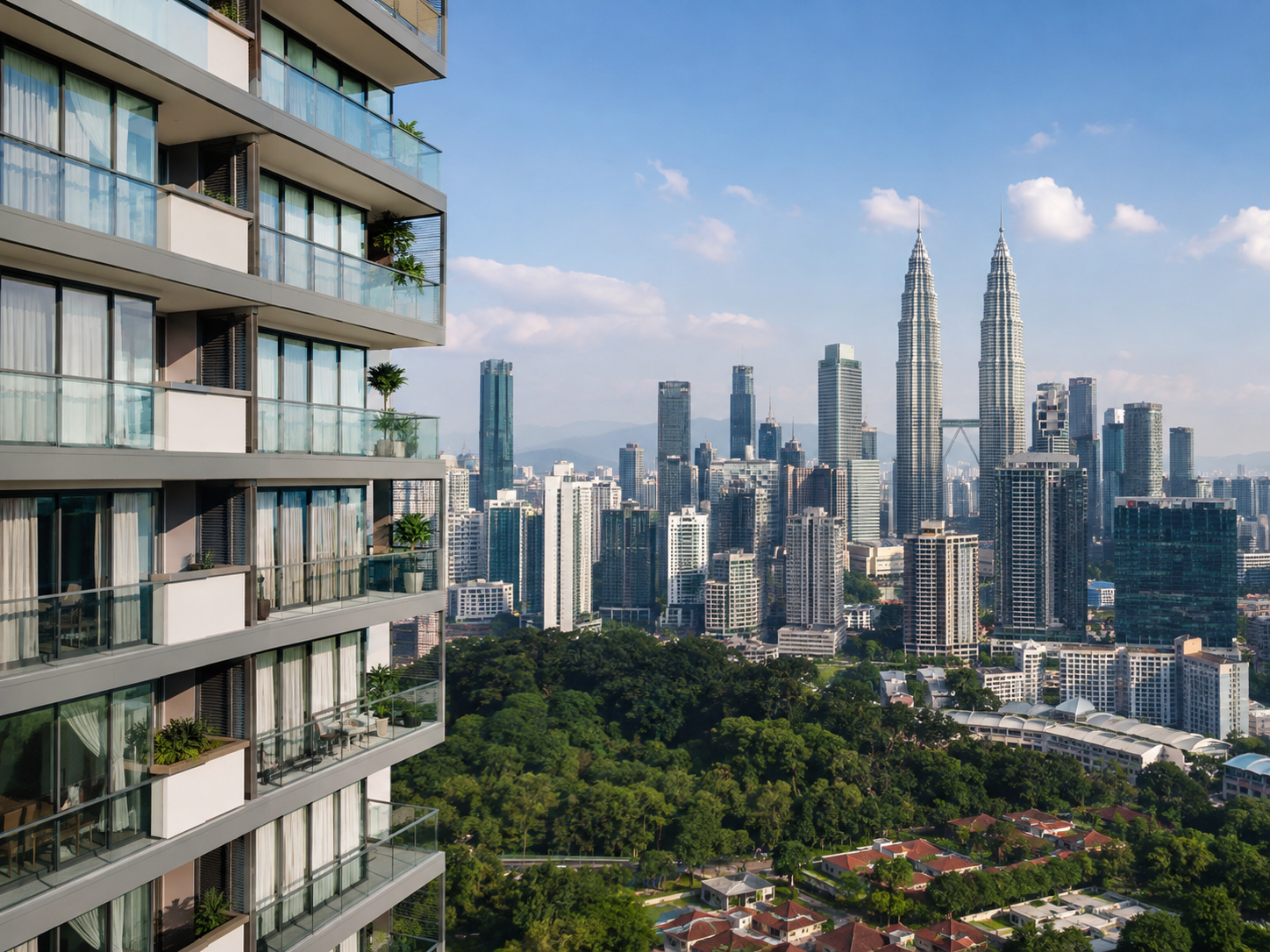
The first question should be:
Will this property support the way I actually want to live in Malaysia?
A property may look attractive during a sales presentation but feel very different once the buyer begins dealing with daily traffic, medical appointments, school journeys, grocery shopping, building management and recurring ownership costs.
For long-term residents, the most suitable property is usually one that combines practical location, comfortable layout, dependable management, manageable holding costs and reasonable future marketability.
This guide explains the main factors foreign buyers should evaluate before choosing a long-term home in Malaysia.
Quick Answer
Foreign buyers choosing property for long-term living in Malaysia should prioritise:
- Their main reason for living in Malaysia
- Healthcare and emergency access
- Daily convenience
- School and workplace travel
- Practical unit layout
- Building management quality
- Transport and neighbourhood accessibility
- Total ownership cost
- Foreign ownership eligibility
- Future rental and resale marketability
The cheapest property, newest project or highest projected rental yield is not automatically the best long-term home.
A suitable property should remain comfortable to live in, affordable to maintain and reasonably easy to rent or sell when the buyer’s plans change.
1. Begin With Your Long-Term Living Purpose
Different foreign buyers come to Malaysia for different reasons.
Some plan to retire. Others relocate for work, children’s education, healthcare, family reasons or a second-home lifestyle.
Your purpose should determine the type of property and location you consider.
A retirement buyer may prioritise:
- Private healthcare
- Quiet surroundings
- Lift accessibility
- Nearby groceries and pharmacies
- Lower-maintenance layouts
- Easy transport without long driving distances
A family with school-age children may prioritise:
- International school access
- Larger bedrooms
- Storage space
- Family facilities
- Safe surroundings
- Predictable school travel times
A professional working in Kuala Lumpur may care more about:
- Access to KLCC, TRX or other employment centres
- MRT or LRT connectivity
- Reliable internet
- Nearby dining and services
- Shorter commuting time
A second-home buyer who spends only part of the year in Malaysia may prefer a development with stronger security, building management and property-management support.
There is no single property that suits every foreign buyer. The right choice depends on how the home will be used.
2. Choose a Location Based on Daily Life
Foreign buyers often begin by comparing famous locations or advertised distances.
However, long-term living depends more on everyday convenience than on the prestige of an address.
Before buying, study the area within approximately three to five kilometres of the property.
Check whether it provides practical access to:
- Supermarkets
- Hospitals and clinics
- Pharmacies
- Restaurants
- Banks
- Shopping centres
- Parks
- Public transport
- Schools
- Places of worship
- Daily household services
A mature neighbourhood may offer more immediate convenience than an emerging location that depends heavily on future development promises.
Foreign buyers should also visit the area at different times of day. Morning traffic, evening congestion, weekend activity, construction noise and pedestrian conditions may not be obvious during a single showroom visit.
Your experience of the neighbourhood on an ordinary weekday may be more important than the view shown in a brochure.
For a broader comparison of locations, refer to the Best Areas for Foreigners to Buy Property in Malaysia guide.
3. Give Healthcare Access Greater Priority
Healthcare accessibility is especially important for retirees, older residents, families with young children and buyers managing long-term medical conditions.
Being “near a hospital” should not only mean that a medical centre appears nearby on a map.
Buyers should consider:
- Actual driving time
- Peak-hour traffic
- Emergency access
- Availability of specialist treatment
- Nearby pharmacies
- Language accessibility
- Insurance arrangements
- Alternative hospitals if the nearest facility is unavailable
A property located within practical reach of established private hospitals can make long-term living more manageable.
For older buyers, the design of the property itself also matters. Long walking distances from parking areas, multiple internal staircases, difficult bathroom access or poor wheelchair movement may become more important over time.
A home should not only suit the buyer today. It should continue to work if mobility or healthcare needs change.
4. Test School and Workplace Travel in Real Conditions
A property may appear close to an international school or workplace when measured by distance, but actual travel time can be very different.
Parents should test the school route during the normal morning and afternoon periods.
Important questions include:
- Is school transport available?
- Does the route depend on one congested road?
- How long is the journey during heavy rain?
- Are alternative routes available?
- Will the commute remain manageable for several years?
- Are there other suitable schools nearby?
The same applies to professionals travelling to business districts.
A property that reduces daily commuting time may provide greater long-term value to the resident than one offering more facilities but requiring an exhausting journey every day.
5. Choose a Layout for Real Living
Foreign buyers should examine how the unit will function after furniture, storage and household routines are added.
Built-up size alone does not determine whether a property is comfortable.
Review:
- Bedroom dimensions
- Wardrobe space
- Kitchen practicality
- Natural light
- Ventilation
- Laundry and yard areas
- Bathroom access
- Privacy between bedrooms
- Storage
- Balcony usability
- Work-from-home space
- Noise from lifts, roads or facilities
A smaller but efficiently planned unit may be more comfortable than a larger unit with wasted corridors, narrow rooms or an impractical kitchen.
Buyers should also consider who may stay in the property in the future. Visiting children, elderly parents, domestic support or long-term guests may require additional privacy and space.
Show units can appear larger because they use customised furniture, mirrors and limited storage. Buyers should always compare the show unit with the approved floor plan and actual measurements.
6. Examine the Building, Not Only the Unit
A good unit inside a poorly managed building may become difficult to live in and expensive to maintain.
Before buying a completed property, foreign buyers should inspect:
- Common-area condition
- Lift performance
- Security procedures
- Visitor management
- Car park condition
- Water leakage
- Facility maintenance
- Waste management
- Building cleanliness
- Management responsiveness
- Occupancy level
- Short-term rental activity
For a new development, some of these factors cannot yet be observed. Buyers should therefore review the developer’s delivery record, building density, lift provision, planned maintenance fees and the practicality of the facilities.
A very large facility list may look attractive, but every pool, garden, lounge and recreational area requires maintenance.
The long-term question is not only whether the facilities look impressive at launch. It is whether the owners can sustain their upkeep after the building has been occupied for several years.
7. Calculate the Full Cost of Ownership
Foreign buyers should not assess affordability based only on the purchase price or monthly loan instalment.
Long-term ownership may involve:
- Maintenance fees
- Sinking-fund contributions
- Assessment tax
- Parcel rent or quit rent
- Insurance
- Repairs
- Air-conditioning servicing
- Furnishing replacement
- Property-management fees
- Loan interest
- Currency-conversion costs
- Legal and transaction expenses
Stamp duty in Malaysia is imposed on relevant legal instruments, including instruments used to transfer property and create security for financing.
Luxury developments and larger units generally involve higher monthly expenses. Buyers who will only occupy the property for part of the year must still pay these costs while the home is vacant.
A property that is affordable to purchase but difficult to maintain may become a financial burden over a long holding period.
8. Confirm Foreign Ownership Eligibility Before Booking
Foreign buyers should verify legal eligibility before paying a booking fee or signing purchase documents.
Foreign ownership conditions may differ by state, property type and transaction structure.
Malaysia’s federal land authority states that a transfer to a non-Malaysian citizen or foreign company requires approval from the relevant State Authority. It also notes that procedures and fees may differ under individual state land rules.
Buyers should confirm:
- The applicable foreign purchase threshold
- Whether the property is open to foreign ownership
- Whether State Authority consent is required
- Whether there are title restrictions
- Whether the unit falls under a restricted category
- Whether the quoted price meets state requirements
- Whether the property qualifies under the buyer’s residency programme
These matters should be checked with a Malaysian conveyancing lawyer and the relevant state authority.
The existing Foreign Buyer Guide Malaysia provides a broader overview of foreign ownership and available supporting articles.
9. Understand the Relationship Between MM2H and Property
Foreign buyers do not necessarily need MM2H simply to purchase property in Malaysia. Property ownership and residency status are separate matters.
However, buyers participating in the federal MM2H programme must also consider the programme’s residential purchase conditions.
Current official MM2H guidelines require approved participants to purchase and own a residence. The stated minimum residential values are RM600,000 for Silver, RM1 million for Gold and RM2 million for Platinum. The SEZ or SFZ category follows the property price set for the designated zone.
The official guidelines also state that the MM2H residence generally cannot be sold for 10 years, unless the participant upgrades to a higher-value home.
This makes property selection particularly important for MM2H buyers.
A home chosen mainly because it meets the minimum purchase value may not remain suitable for the buyer’s lifestyle over a long holding period.
MM2H applicants should review the latest official requirements and seek advice from a licensed MM2H operator and conveyancing lawyer before proceeding.
For programme-related information, refer to the Malaysia My Second Home Guide.
10. Consider Future Rental and Resale Marketability
Even an own-stay buyer should consider what may happen if personal plans change.
A foreign owner may eventually:
- Return to their home country
- Relocate to another Malaysian city
- Need a larger or smaller home
- Rent out the property
- Transfer the property as part of estate planning
- Sell after the permitted holding period
Before buying, ask:
- Who would rent this unit?
- Who would buy it in the future?
- Is the layout accepted by local as well as foreign buyers?
- Is the price significantly above surrounding properties?
- Is there too much similar supply nearby?
- Is the building likely to remain well maintained?
- Will the property remain affordable to hold?
A property that appeals only to a narrow group of overseas buyers may be more difficult to resell.
Long-term marketability is generally stronger when a property has practical layouts, a recognised location, manageable costs and demand from both Malaysian and international residents.
11. Consider Renting Before Buying
Foreign buyers who are unfamiliar with Malaysia may benefit from renting before making a long-term purchase.
Renting for six to twelve months can help the buyer test an area, but MM2H participants should first confirm that their approval conditions and property-purchase timeline allow that delay. The public MM2H category pages do not clearly state one universal purchase-completion deadline, so written confirmation should be obtained before postponing a required purchase.
Where the participant’s timeline allows it, renting first can help the buyer test:
- Traffic conditions
- Weather and walking comfort
- School travel
- Healthcare access
- Neighbourhood noise
- Building management
- Daily shopping
- Community environment
- Preferred unit size
Renting first is not necessary for every buyer. Someone who already knows the area well and has a clear long-term plan may be ready to purchase.
However, buyers relying mainly on online research or short holiday visits may discover that their preferred area feels different during normal daily life.
A temporary rental period can reduce the risk of committing to the wrong neighbourhood or property type.
Final Considerations
Choosing a property for long-term living in Malaysia is different from selecting a short-term investment.
The most suitable home is not necessarily the one with the lowest entry price, the most facilities or the strongest projected return.
It is the property that supports the buyer’s real lifestyle, remains financially manageable and continues to offer practical market acceptance in the future.
Foreign buyers should place greater emphasis on:
- Daily convenience
- Healthcare access
- Travel time
- Layout quality
- Building management
- Ownership eligibility
- Recurring costs
- Long-term flexibility
Before committing, buyers should visit the area more than once, compare completed and new properties, review the legal requirements and calculate the full cost of ownership.
A good long-term property decision should continue to make sense after the sales incentives, launch excitement and initial relocation period have passed.
Frequently Asked Questions
What should foreign buyers prioritise when choosing a home in Malaysia?
They should prioritise lifestyle purpose, healthcare, daily convenience, transport, layout, management quality, ownership costs and future marketability.
Do foreigners need MM2H to buy property in Malaysia?
Not necessarily. Foreign property ownership and MM2H participation are separate matters, although both remain subject to their respective requirements.
Should foreign buyers rent before purchasing?
Renting first may be useful for buyers who are unfamiliar with the area. It allows them to test traffic, amenities, healthcare access and daily living conditions before making a long-term commitment.
Is a new development better than a completed property?
Not automatically. A new development may offer newer facilities and payment arrangements, while a completed property allows buyers to inspect the actual unit, building management and surrounding environment.
Is rental yield important for an own-stay buyer?
It can still be relevant because the owner may need to rent out the property later. However, long-term living comfort, ownership costs and resale marketability should normally receive equal or greater attention.
Who should confirm foreign ownership eligibility?
Buyers should engage a Malaysian conveyancing lawyer and verify the applicable requirements with the relevant state authority before signing purchase documents.
*This article provides general property information and does not constitute legal, tax, immigration, financial or investment advice. Rules may change and may differ by state, buyer profile and residency programme.*
Need Help with Your Property Decision?
Every buyer has different priorities, budgets and concerns. Louis can help you understand your options, compare suitable properties and make a clearer decision based on your own-stay or investment goals.
Disclaimer: This article provides general property-buying information and does not constitute legal, financial or loan advice. Laws and contractual arrangements may differ according to the property type, location and transaction. Buyers should obtain advice from qualified professionals based on the actual documents involved.